How to plan a safer waterfall group trip
Plan a waterfall group trip around weather, local access, footwear, water conditions, headcounts, and a fixed return time for a better day outdoors.
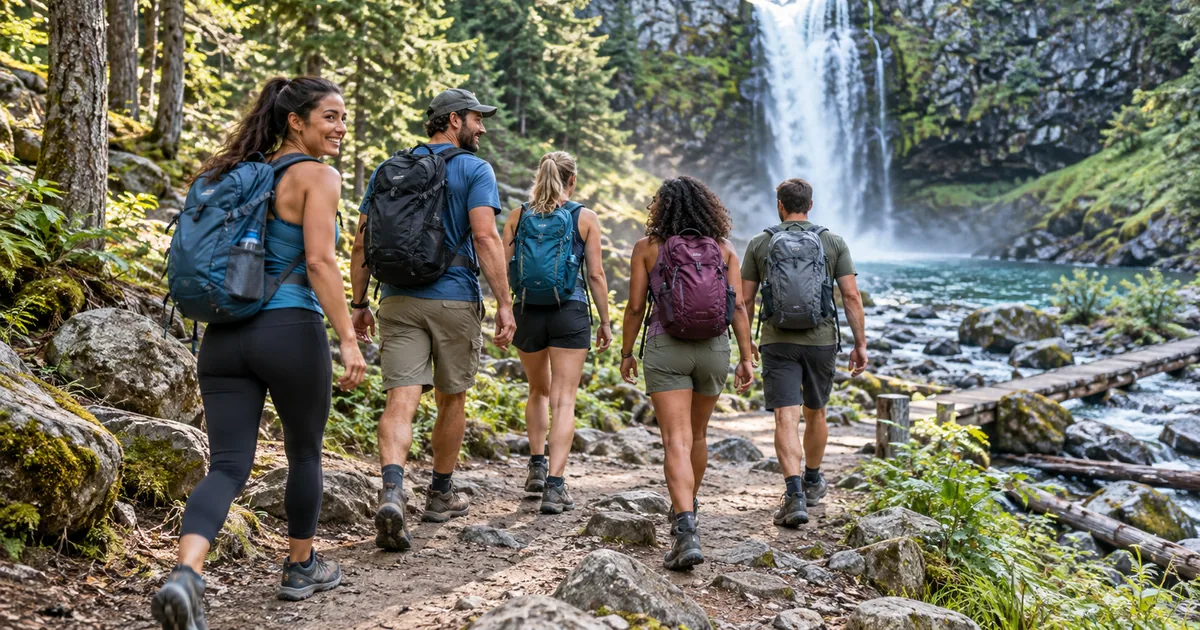
Waterfalls can change character quickly. A gentle path in dry weather may become slippery, flooded, or inaccessible after rain upstream. A good waterfall group trip begins with current local information, not only beautiful photos.
Check conditions from an authority
Use the managing park, local government, tourism office, or accredited guide for access status, weather closures, permits, and swimming rules. Conditions at the waterfall can differ from the weather where the group starts.
If officials close the site or a guide says conditions are unsafe, use the backup activity. A long journey does not make the water negotiable.
Match the route to the whole group
Ask about distance, gradient, river crossings, steps, exposed sections, toilets, and mobile coverage. Plan for the least confident walker, not the fastest. Wear secure trail-appropriate footwear and bring water, sun or rain protection, essential medication, and a dry bag.
Avoid climbing barriers or entering restricted pools for a photo. Respect local rules and leave the place as you found it.
Use a turnaround time
Choose a time when the group heads back regardless of progress. Leave enough daylight and energy for the return route. Count the group at the trailhead, major junctions, waterfall, and vehicle.
For children or vulnerable travellers, direct adult supervision is essential; a headcount or location dot is not enough.
Where Nearby fits
Nearby can help a small group meet at the car park or trailhead while data is available. Pin the official entrance rather than the waterfall itself and let browser guests join without accounts.
Do not rely on Nearby in remote terrain. It requires connectivity, its GPS position can be inaccurate around cliffs or dense cover, and it is not a rescue tool. Once the hike starts, follow marked routes and the local safety plan. The group hike guide covers trail behaviour in more detail.
Go or no-go checklist
- Official site open and weather acceptable
- Route suits every participant
- Required guide or permit confirmed
- Proper footwear, water, and daylight
- Turnaround time and headcount points
- Offline details and emergency plan
The waterfall will be there another day. The best group decision is the one that brings everyone back comfortably.
Use Nearby for arrival at the trailhead, with local guidance and offline safety plans leading the actual hike.
Common questions
What should I check before a waterfall trip?
Check the official access status, weather and flood warnings, local guide requirements, trail difficulty, transport, daylight, and whether swimming is allowed.
What shoes are best for a waterfall visit?
Wear secure footwear suited to the actual trail and wet surfaces. Flip-flops and smooth soles provide poor grip on mud, rock, and steps.
Can a live map keep a hiking group safe?
No map or app guarantees safety or coverage. Stay on approved routes, follow local authorities and guides, keep the group together, and carry an offline and emergency plan.