What to do when a student is missing at school camp
A missing student at camp needs a calm, immediate response. Use a verified headcount, alert staff and authorities, and keep the rest of the group supervised.
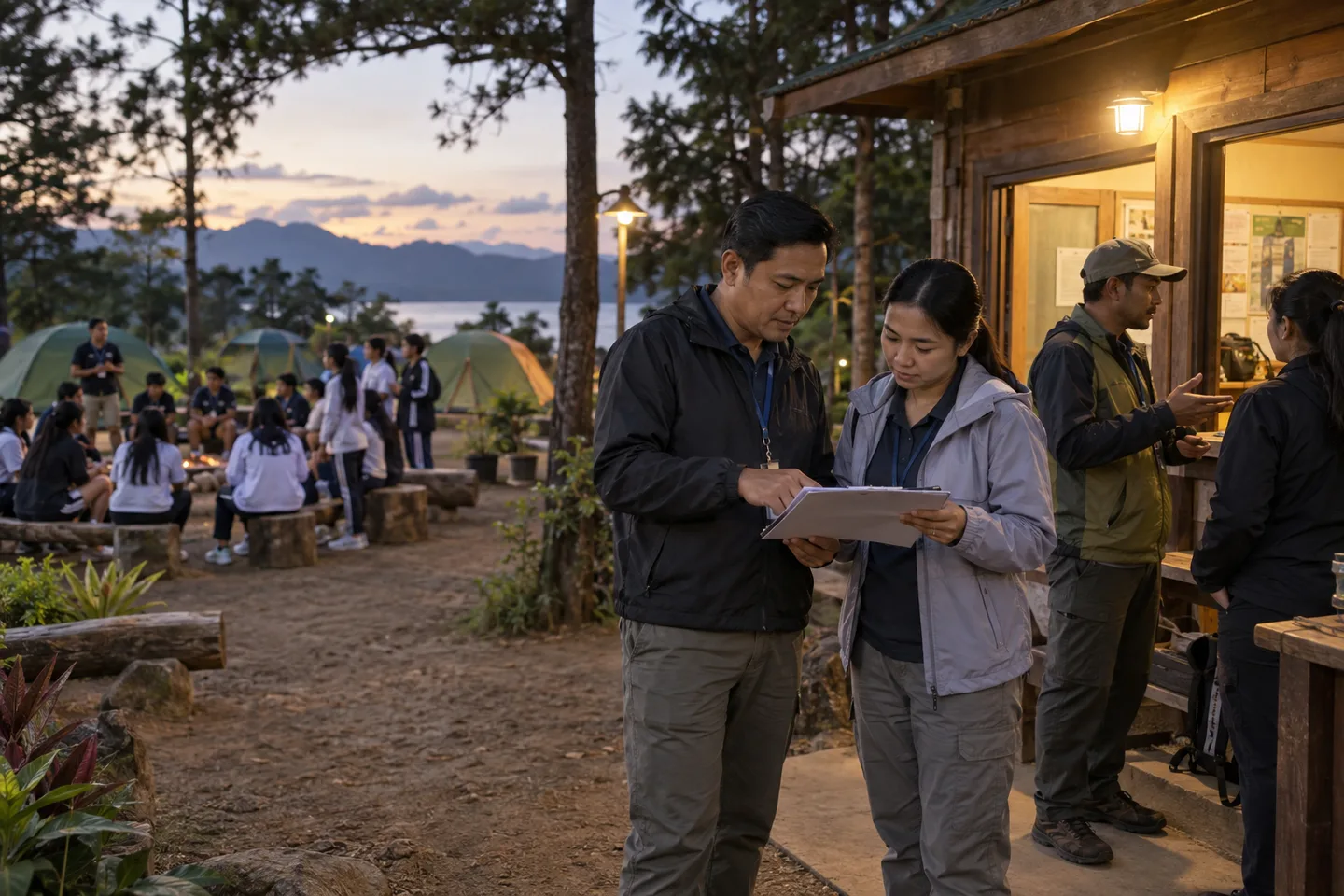
At a busy campsite, a missing student might be at the washroom, with another activity group, or somewhere unsafe. The first minutes are for checking facts and getting help, not guessing which explanation is most likely.
Every school should use its own safeguarding and emergency procedure. The steps below help adults organize the immediate response; they do not replace that procedure or instructions from campsite staff and local authorities.
Stop and verify the count
Pause the activity and bring the other students to their assigned adults. Check names against the roster, not just a total. Ask who saw the student last, at what time, and where. Check whether another adult formally took responsibility for the student. Record the last confirmed sighting and avoid spreading an unverified story through the group chat.
Keep the rest of the students supervised. Do not send classmates off to search, even if they know the missing student’s usual hangout. A second missing student makes the response harder and less safe.
Alert the people who can act
Tell the trip lead and campsite staff immediately. Use the school’s missing-student process, including its requirements for informing the school and parents. If there is any reason to believe the student is in danger, contact local emergency services or police without delay. This is especially urgent near water, roads, steep ground, at night, or during severe weather.
Scouting America’s camp emergency planning guidance calls for a written plan, current emergency contacts, coordinated search roles, and prompt notification of authorities if a missing camper is not found quickly. Follow the local campsite’s procedure and the direction of responders rather than improvising a wide search.
Give staff and responders the student’s name and description, last confirmed location and time, clothing, relevant medical or accessibility information, and the contact number for the trip lead. Share sensitive details only with those responding to the incident.
Keep one source of confirmed information
Assign one adult to record times, calls, and confirmed sightings. Another adult stays with the supervised group. When the student is found, confirm their condition directly, update the trip lead and authorities, and follow the school’s parent notification and incident reporting rules.
The response works better when the foundations were laid earlier: a named adult for each small group, a roster that travels with the group, and a count at every transition. Our school trip headcount guide explains that routine, while the high school camp emergency plan covers the broader preparation.
Treat phone location as a clue, not an answer
If adults are already using Nearby to coordinate around the campsite, its temporary map may help them find the agreed assembly point. It is not a student tracker or a safeguarding system. A phone can be left in a tent, lose signal, run out of power, or report an imprecise position. Never mark a student safe because an avatar appears on a map, and never delay a call for help while trying to open an app.
The priority is a verified count, supervised students, and a coordinated response led by the school, campsite, and appropriate authorities.
Common questions
What is the first step when a student is missing at camp?
Stop the activity, account for every other student by name, tell the trip lead and campsite staff, and follow the school's missing-student procedure immediately.
Should other students search for a missing classmate?
No. Keep students with their assigned adults. The trip lead and campsite staff should coordinate any search and contact local authorities when safety is uncertain.
Can a shared map show whether a missing student is safe?
No. A phone may be off, left behind, out of signal, or showing an old or inaccurate position. Treat any app location only as a clue for the responsible adults and responders.