A practical emergency plan for a high school camp
Plan for storms, injuries, lost contact, and evacuation before a high school camp begins. A clear leader plan helps students know where to go and whom to tell.
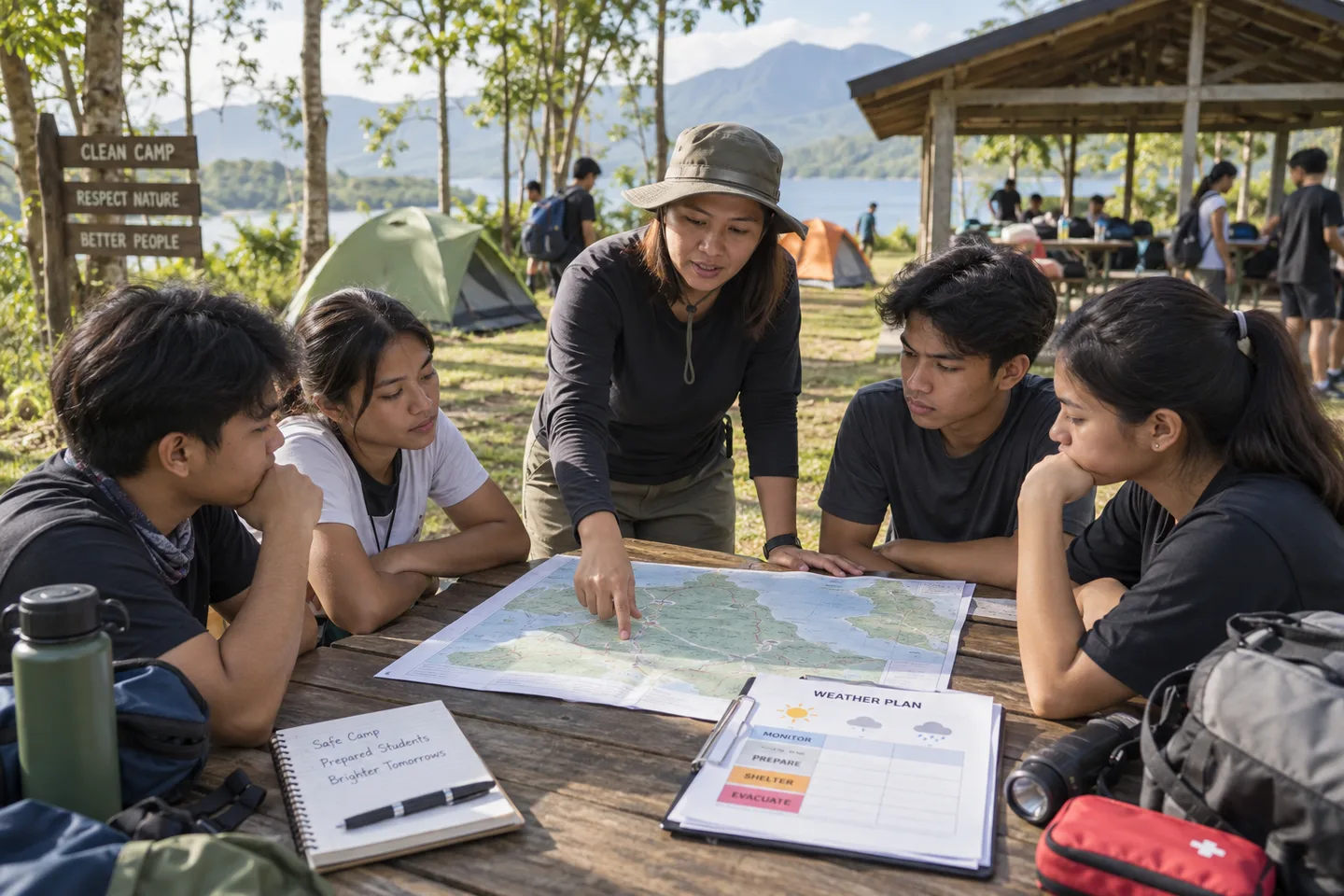
A camp emergency plan should fit on a page that a tired teacher can use in the dark. If it needs a long explanation, make it simpler before the bus leaves.
High school students may be capable campers, but the adults still need a clear plan for weather, injuries, a missing student, and a change of site. The plan should follow the school’s safeguarding rules, the campsite’s procedures, and local authority instructions.
Walk the site before students spread out
On arrival, ask the campsite staff where to find the office, first aid point, vehicle access, safe storm shelter, and assembly area. Check the route between tents and shelter in daylight. Identify any water, steep ground, roads, or other boundaries that students must not cross without supervision.
The National Park Service campsite guidance advises checking for flash flooding, lightning, wind, and falling branches when choosing a site. Conditions and local rules differ, so use the campsite’s own risk assessment too.
Give each adult a specific job
Keep a current roster with each student’s assigned group and adult. Name a trip lead who makes decisions, an adult who calls emergency services or the campsite office, an adult who holds the roster, and an adult who contacts the school and families. Have a backup for each role.
Before activities begin, tell students what signal means “stop and report to your adult,” where to assemble, and what to do if they cannot reach that point safely. Practice one short regroup while everyone is calm. Count students by name at transitions, including after a hike, before lights out, and after moving to shelter. For more on that routine, see our school trip headcount guide.
Decide when to stop an activity
Check PAGASA weather updates and campsite announcements, not just the forecast from the previous day. If thunder is heard, move to a substantial building or an enclosed hard-top vehicle. A tent or open picnic shelter is not safe lightning shelter. The National Park Service lightning guidance says to wait at least 30 minutes after the last thunder or lightning before resuming outdoor activity.
For an injury or sudden illness, get the designated first aid adult and follow the school’s medical plan. Call local emergency services promptly when someone may be seriously hurt. Give responders the campsite name, access point, and the student’s last confirmed location. Avoid turning a worried group of students into an improvised search party.
Keep a paper backup
The trip lead and a second adult should each carry the roster, emergency contacts, campsite address, and written instructions for reaching the assembly area. Keep sensitive student information secured and share it only with people who need it. Charge phones and power banks, but plan for no signal.
Nearby can help a small group of adults coordinate an ordinary arrival at the agreed meeting point while mobile data works. Its temporary shared map is optional. It cannot confirm that every student is safe, replace a physical count, or direct an evacuation. During an emergency, follow the campsite and school plan first.
The useful test is simple: if every phone goes flat, can each adult still say where students should go, who counts them, and who calls for help?
Common questions
What should a high school camping emergency plan include?
Include a student roster, named adult responsibilities, a safe shelter, an evacuation route, medical and parent contacts, a communication backup, and a clear way to account for everyone.
Is a tent safe during a thunderstorm?
No. Move to a substantial building or enclosed hard-top vehicle when thunder is heard. Follow the campsite's emergency instructions and wait until the storm has passed before resuming activities.
Can a location-sharing app replace the camp emergency plan?
No. Phones, batteries, mobile data, and GPS can fail. A shared map can help adults coordinate ordinary arrivals, but it is not a headcount, emergency alert, or rescue system.