How to meet your group before a sunrise hike
A sunrise hike needs an exact trailhead, an early arrival plan, and a clear turnaround time. Get the group together before starting on a dark trail.
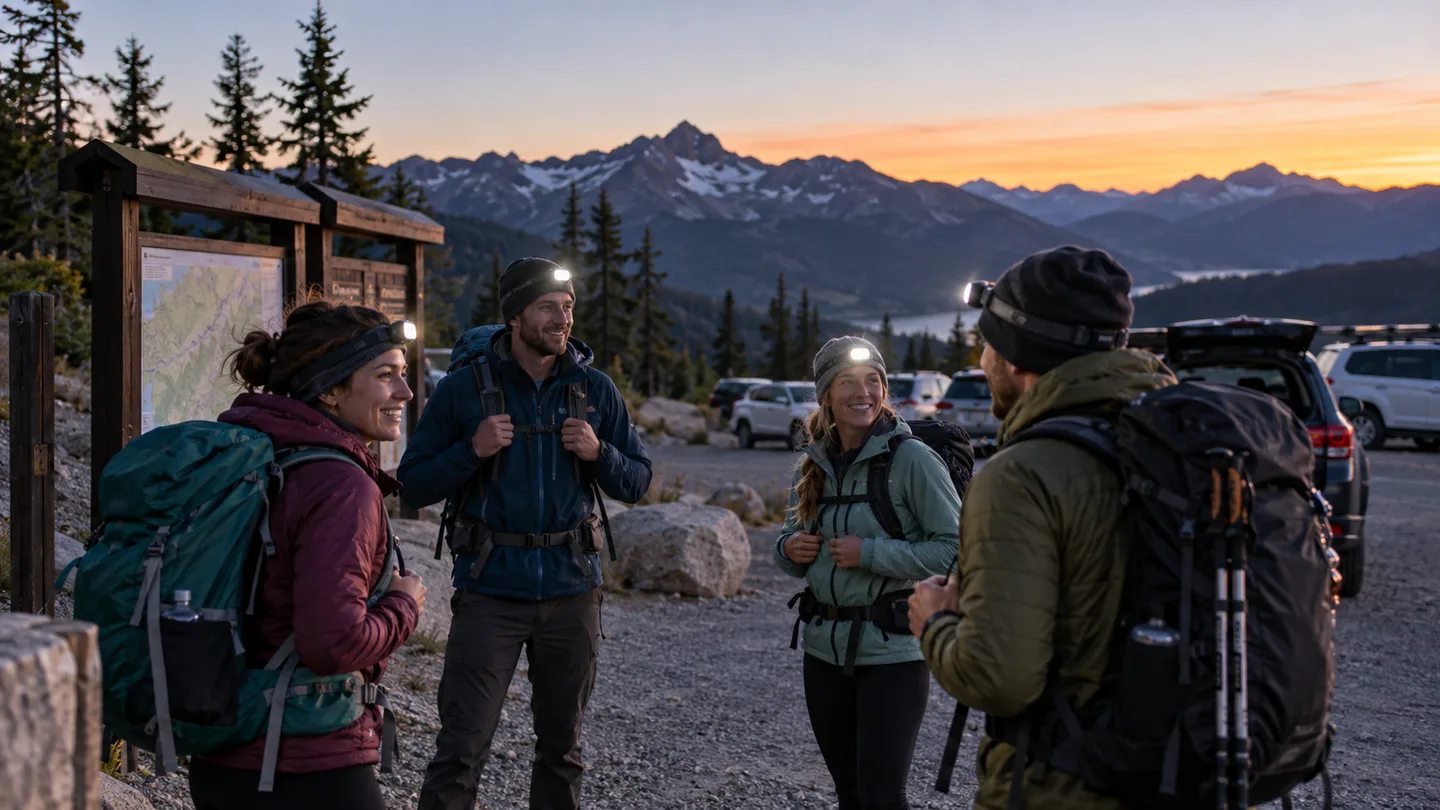
At 4:45 a.m., “the trailhead” is not enough information. One car can be at the official parking area, another at a roadside pullout, and a third at the wrong end of the route.
A sunrise hike begins before anyone sets foot on the trail. The group needs one legal gathering place and a decision about what happens if someone does not arrive.
Confirm the actual start point
Send the official trail name, allowed parking or drop-off area, and the entrance the group will use. Check current access rules, weather, and closures with the land manager or local guide. Save directions offline and ask drivers to arrive early enough to park without rushing.
Take a photo of the trailhead sign when you arrive. If there are two similarly named entrances, the sign gives late arrivals a useful reference. Do not choose a roadside spot that blocks access or creates a traffic hazard.
Count before leaving the lighted area
Set a gathering time, a briefing time, and a departure cutoff. Count every hiker by name, check that each person has the agreed basic gear, and identify the lead and the person at the back. If someone has not arrived by the cutoff, contact them from the meeting area. Do not send them alone into the dark to catch up.
The National Park Service hiking guidance recommends choosing a route that fits the group, leaving a trip plan with someone outside the hike, staying together, and setting a turnaround time. Its group hiking guidance also emphasizes buddies and staying put if lost unless there is an immediate threat.
Make the return plan before sunrise
Decide the turnaround time and the place where everyone will regroup after the walk. Weather and daylight can change the route; the summit photo is optional, the safe return is not. Carry an offline map and follow the local guide’s instructions where required.
Our group hiking guide covers pace and junctions once the group is moving. For this meetup, the key job is making sure the right people start from the same place.
Where Nearby fits
If mobile data works near the road, a temporary Nearby meetup can help the cars converge on the official trailhead. Pin the public entrance, not an approximate point in the hills. Browser guests can open the link without an account.
Once the hike starts, treat the app as unavailable. Terrain and signal can interrupt live positions. Nearby is not an offline map, emergency beacon, or substitute for a headcount. The route, lead, back marker, and turnaround rule carry the day.
Meet first. Count. Brief. Then walk together.
Common questions
Where should a sunrise hiking group meet?
Use the official trailhead or an allowed parking area, with the exact entrance and meeting time shared in advance. Confirm local access rules before leaving.
What if someone is late for a sunrise hike?
Agree on a departure cutoff before the day. Do not send a late hiker onto an unfamiliar dark trail alone to catch up.
Can Nearby track a hiking group on the trail?
It needs mobile data to share live positions and is not a backcountry safety tool. Use it for arrival at the trailhead when service works, then follow the group's offline route and safety plan.