How to plan a zoo trip with a group
Plan a zoo group day with official maps, accessible routes, animal-first behavior, smaller teams, headcounts, and memorable reunion landmarks.
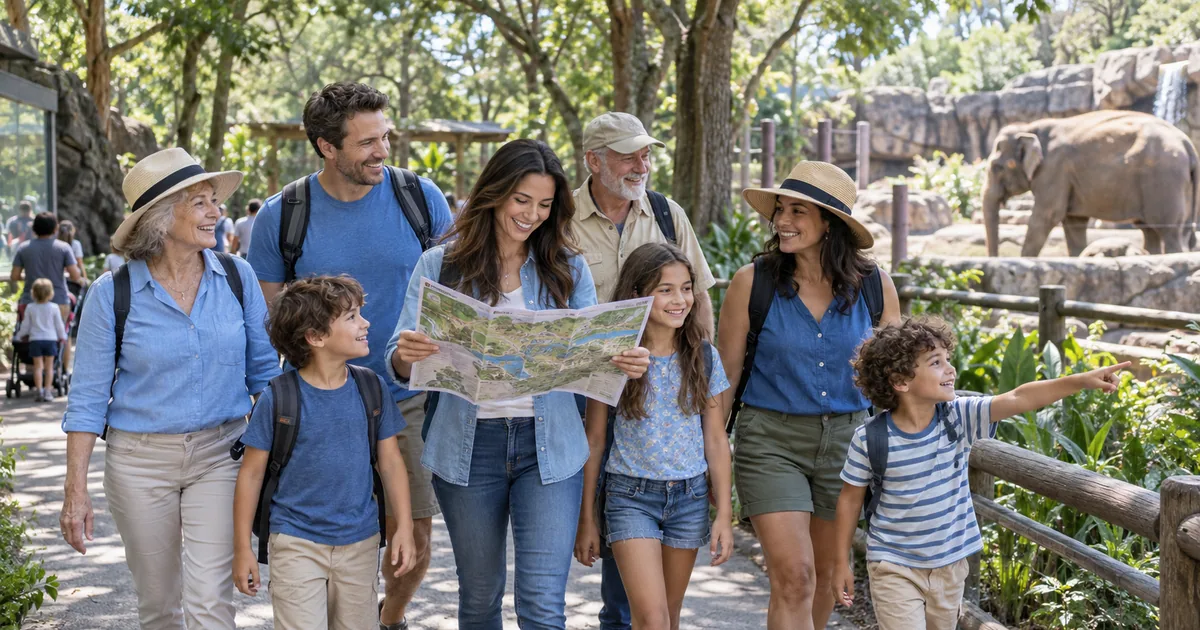
A zoo group day works best when nobody tries to see every animal in one continuous parade. Large grounds, crowded viewing areas, and different interests make smaller groups and fixed reunions more comfortable.
Use the current official map
Check the zoo’s website for hours, tickets, talks, accessibility, weather rules, and closures. Download or collect the current map; routes can change due to habitat work or animal care.
Choose two or three shared priorities, then let smaller groups explore nearby zones. Animals do not follow your timetable, so treat talks and feeding sessions as opportunities, not guarantees.
Design for the slowest pace
Plan shade, water, toilets, seating, meals, and mobility needs. A route that looks short on a map may include slopes or long stretches between rest areas.
Follow zoo rules, keep voices reasonable, and never tap glass, feed animals, cross barriers, or use flash where prohibited. The animals’ welfare comes before the group’s photo.
Give children direct adults
Assign each child to a named supervising adult or household. Bright clothing and contact information can help, but location sharing is not a substitute for staying within sight and following venue procedures if someone is missing.
Pick permanent reunion landmarks away from congested exhibits. Set a time and a wait rule that everyone can remember.
Where Nearby fits
A Nearby meetup can help up to ten people gather at the zoo entrance, picnic area, or final exit. Pin the exact public landmark and invite browser guests without accounts.
Tree cover, buildings, and crowded grounds may affect GPS accuracy. Use the zoo map and exhibit signs for the final route. For families, review the broader park coordination guide, while keeping direct supervision central.
A balanced zoo schedule
- Meet at the main visitor map
- Shared first habitat or keeper talk
- Split into small groups for 90 minutes
- Lunch reunion at a named picnic zone
- Optional second loop
- Final headcount at the exit
When the group has permission to move at different speeds, everyone sees more of what interests them - and the animals get a calmer audience.
Use Nearby for temporary gathering points around the zoo, alongside the venue map and direct supervision.
Common questions
How do you keep a group together at a zoo?
Divide into small buddy groups, set age-appropriate supervision, and schedule fixed reunion points. Count people at entrances and transitions, but never replace direct supervision with a location app.
What should I check before a group zoo visit?
Check official hours, tickets, feeding or talk schedules, accessibility, weather policies, bag rules, food options, and any areas that are temporarily closed.
Where is a good zoo meeting point?
Choose a distinctive permanent landmark outside crowded animal viewing areas, such as the main map, visitor center, or named cafe entrance.