How to travel with older parents without rushing the trip
Plan a calmer trip with older parents around medication, accessible meeting points, realistic pacing, written details, and simple family check-ins.
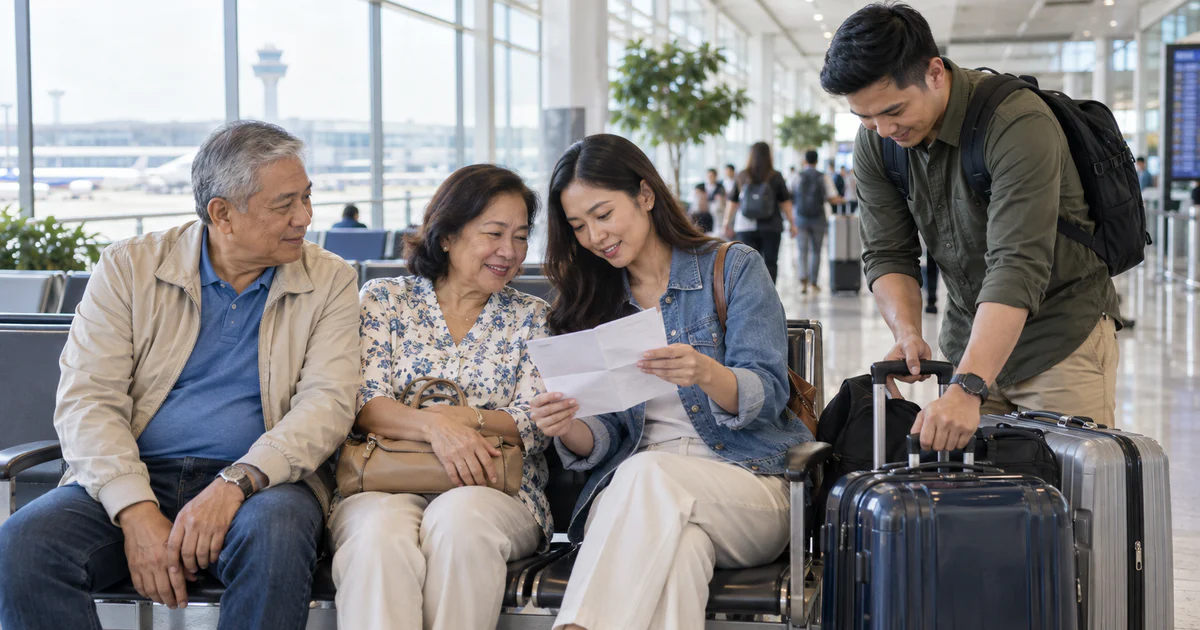
A good family trip should not make an older parent choose between keeping up and speaking up.
Travel becomes easier when the group plans for the person who needs the slowest connection, the shortest walk, or the most predictable meal and medication schedule. That does not mean turning the holiday into a medical operation. It means removing avoidable pressure so everyone can enjoy it.
Ask before you arrange
Start with a direct conversation: What part of the journey feels tiring? Would airport assistance help? How far is comfortable to walk? Are stairs, heat, long queues, or unfamiliar bathrooms a concern? What support would be useful, and what would feel intrusive?
Do not assume that age alone tells you what somebody can do. One parent may happily walk all morning but need an early dinner. Another may need a wheelchair through a large terminal but be completely independent once the family reaches the hotel.
The CDC’s 2026 guidance for travelers with chronic illnesses recommends planning around the destination, duration, transport, activities, season, health condition, and previous travel experience. It also advises arranging special assistance in advance when needed and identifying healthcare and pharmacy options at the destination.
Design a humane itinerary
Leave real time between connections. A 20-minute airport change that looks efficient on a booking screen may become stressful when it includes a shuttle, security queue, lift, and a long walk to the gate.
For each busy day, decide:
- Which activity matters most
- Where the nearest comfortable seat and accessible toilet are
- How the group can split without making anyone feel abandoned
- What gets dropped if energy, weather, or transport changes
- Where everyone will meet after a rest
Choose accommodation for access as well as price. Check the entrance, lift, shower arrangement, walking distance to transport, and whether the route is steep or poorly lit. “Near the station” can still mean several flights of stairs.
Keep medication and health details with the traveler
The person who takes the medicine should keep it in accessible carry-on luggage, not in a suitcase that could be checked or placed in another vehicle. Pack enough for the trip and additional days in case of disruption, following the prescribing professional’s advice.
The U.S. State Department’s guidance for travelers aged 65 and over recommends carrying a healthcare-provider letter describing conditions, allergies, and medicines; knowing generic medicine names; checking destination rules; and planning ahead for refrigeration and accessibility.
Keep a short written list of medicines, doses, allergies, medical contacts, and travel insurance details. Share sensitive health information only with the relatives who genuinely need it. A location-sharing link is not the place to store medical records.
Choose meeting points for comfort, not just visibility
The best landmark is not useful if reaching it requires a long uncovered walk or standing in a crowded doorway. Pick a public place with seating, shade or shelter, accessible toilets, and staff nearby. Name the exact spot: “seats beside the information desk in Arrivals,” not simply “the airport.”
Have a second point for later in the day. If the group separates at a museum, market, or shopping center, agree on the place and time before anyone walks away. Save the address and landmark on paper or as an offline screenshot.
One family member should act as the trip coordinator, but not as a controller. Their job is to keep the current plan clear, confirm changes, and avoid five relatives sending conflicting directions.
Use Nearby for short, agreed meetups
When family members are approaching the same public location, Nearby can provide a temporary shared map, meeting pin, arrival estimates, and group chat. One Android user starts the meetup and sends the link; invited relatives can join from the app or a browser, including on iPhone. Each person chooses whether to share their live position.
Put the pin on the accessible landmark you already agreed on. Do not move it every time somebody takes a different route, and do not use an arrival estimate to pressure a parent to walk faster.
Nearby is not an elder-monitoring, medical-alert, or emergency-response service. GPS can drift indoors, phones can lose power, and mobile data can fail. If a relative has a medical concern or is missing, contact venue staff and the appropriate local services instead of waiting for an avatar to update.
The kindest travel plan is often the least ambitious one. One meaningful activity, an easy meeting point, and enough time to sit together can make a better family memory than racing through a list.
Use Nearby for short, consent-based family meetups - not continuous tracking.
Common questions
How can I make a trip easier for older parents?
Build the itinerary around their actual walking pace, rest needs, medication schedule, accessible transport, and nearby healthcare. Ask what help they want instead of deciding for them.
What should older travelers keep in their carry-on bag?
Keep prescribed medicine in original containers, extra doses for delays, a medication and allergy list, healthcare information, essential documents, water where permitted, and any needed mobility or comfort items.
Can Nearby track an older parent throughout a trip?
Nearby is designed for temporary, consent-based meetup coordination, not continuous monitoring or medical safety. Use it only when invited family members choose to share during a meetup.