A family vacation safety plan for crowded travel days
Build a practical family vacation safety plan with clear roles, identification, meeting points, health preparation, and a simple response if anyone gets separated.
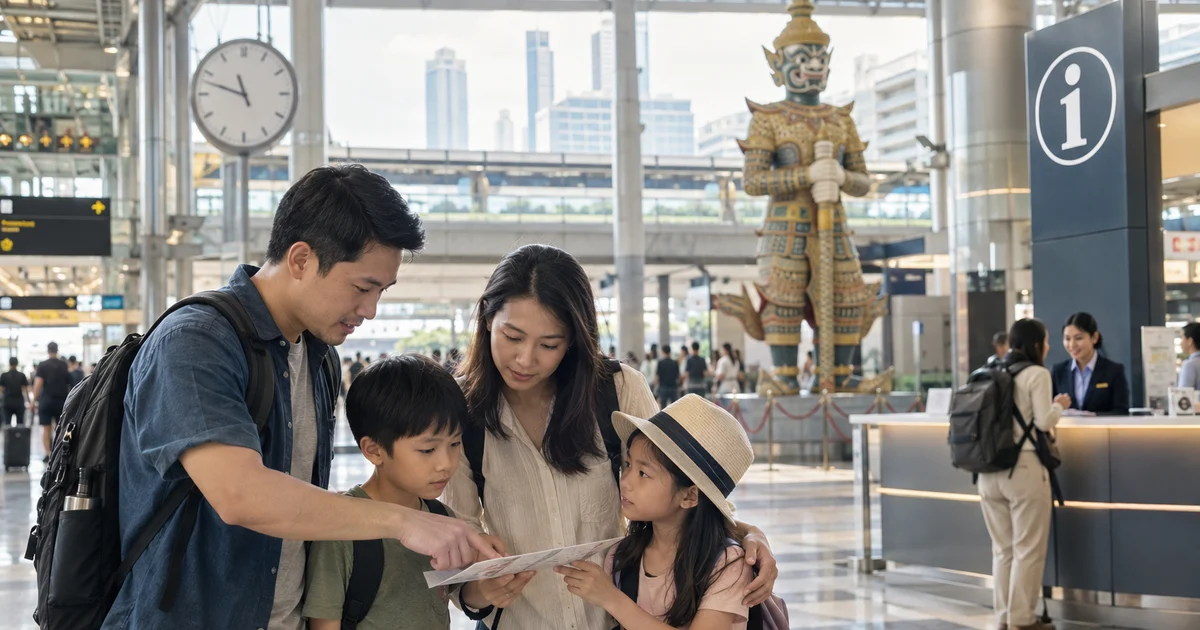
The difficult part of a family vacation is often not the destination. It is the transition between places: leaving a train, finding the correct terminal door, crossing a crowded attraction, or realizing that one adult thought another adult was watching the youngest child.
A family vacation safety plan should be short enough to remember and specific enough to use. It is not a document designed to make travel feel dangerous. It is a shared answer to a few practical questions: Who is responsible for whom? Where do we meet if we separate? Who has the documents? What happens when a phone is unavailable?
Plan the transitions, not only the itinerary
Walk through the day from door to door. Mark the moments when the family will change transport, pass through security, collect luggage, enter a large venue, or split into smaller groups. Those are the moments that need decisions.
For each major stop, record:
- The complete address and correct entrance
- The transport route and backup
- One fixed public meeting landmark
- The name of the adult who will wait there
- The next safe place if the family must leave
“Meet at the station” is not enough. “Meet beside the staffed information counter outside the north ticket gates” gives everyone the same destination. Choose a point children can describe to a member of staff and adults can reach without crossing a restricted area.
Give every person the information they can use
Do not keep the entire plan on one phone. Batteries die, bags get misplaced, and the person holding the itinerary may be the one who is delayed.
The CDC’s guidance for traveling safely with children recommends that children carry identifying information and contact numbers in their clothing or pockets in case family members become separated. Use a small card or secure identification band with the child’s name and two trusted adult numbers. Avoid putting a home address or unnecessary private details where anyone can see them.
Older children should know the full name of the adult they are traveling with, the accommodation name, and how to identify uniformed venue staff. Teach one simple rule: if separated, stop moving, go to the agreed point if it is immediately safe and familiar, or ask a verified staff member for help. They should not leave the venue with an unknown person.
Each adult should carry copies of essential travel documents and a contact card. The CDC’s Pack Smart checklist also recommends lodging information, health contacts, prescriptions, insurance documents, and information about nearby clinics or emergency services. Keep sensitive copies secured rather than loose in a shared bag.
Assign adults instead of assuming
Use names, not vague responsibility. “Mia is with Dad from the entrance through security” is clear. “We are all watching the children” can mean nobody knows who is watching at a particular moment.
Before a busy transition, do a quick verbal handoff. The adult taking responsibility confirms it. When the group boards a vehicle or leaves a location, count people and bags separately.
Account for the needs of older relatives and family members with disabilities. A meeting point may look convenient on a map but still require stairs, a long uncovered walk, or crossing several traffic lanes. Ask what pace, seating, medication access, or mobility assistance the plan must allow.
Prepare health needs before departure
Children can experience the same travel health risks as adults, but the effects may be harder to recognize or more serious. The CDC’s family travel guidance advises families to discuss destination-specific health needs with a healthcare professional before travel, keep routine vaccinations current, know where to obtain care, and pack an appropriate travel health kit.
Carry necessary medicines in accessible hand luggage with the correct instructions. Add water, suitable snacks, sun or rain protection, and any comfort item a child relies on. If a child has an allergy or medical condition, more than one adult should know the response plan.
Transport safety remains part of the plan. Use the appropriate seat belt, child restraint, helmet, or life jacket for the activity and destination. A shared map cannot make an unsafe vehicle, road, or water activity safe.
Decide what separation means before it happens
Not every delay is an emergency. A relative who entered through the wrong gate needs a meeting point. A missing young child, medical concern, or credible danger needs venue staff, security, police, or local emergency services immediately.
Agree on a short ordinary-separation routine:
- Stop and check the agreed landmark.
- Contact the group’s designated coordinator.
- One adult stays at the meeting point while another speaks to staff.
- Escalate immediately when a child, vulnerable person, injury, or danger is involved.
Do not ask everyone to search independently. That creates more moving people and makes the family harder to reunite.
Use Nearby for ordinary arrival coordination
For invited relatives approaching a terminal, hotel, museum, or attraction, Nearby can help with the final meetup. One person starts the meetup on Android and sends the invitation. Family members can join through the app or a browser, including on iPhone, without creating an account. Each person decides whether to share their live position, and the group can use the temporary map, arrival estimates, and chat.
Put the meeting pin on the public landmark already written in the family plan. Do not keep moving it toward the last person, and do not rely on it as the only record of the address.
Nearby is not a child tracker, safeguarding system, emergency alert, or replacement for supervision. Location can be delayed or inaccurate, mobile service can fail, and a phone may be unavailable. In a real emergency, contact the appropriate local authority and follow staff instructions.
The best family vacation safety plan is mostly invisible. Everyone knows the next stop, the adults know their responsibilities, and the family can spend its attention on the trip rather than on constant “Where are you?” messages.
Use Nearby for the ordinary moment when invited family members are safely making their way to the same public meeting point.
Common questions
What should a family vacation safety plan include?
Include current contact information, one meeting point at each major stop, adult responsibilities, transport and accommodation details, health needs, and a clear response if someone becomes separated.
What information should children carry while traveling?
Children should carry their name and trusted adult contact numbers in a pocket, card, or secure identification band. Avoid displaying unnecessary private information publicly.
Can Nearby replace adult supervision during family travel?
No. Nearby can help invited relatives coordinate an ordinary arrival, but it is not a child tracker, emergency service, or substitute for direct adult supervision.