A storm surge evacuation meeting plan for families
Create a storm surge evacuation meeting plan with official routes, two reunion points, written contacts, and clear family check-ins.
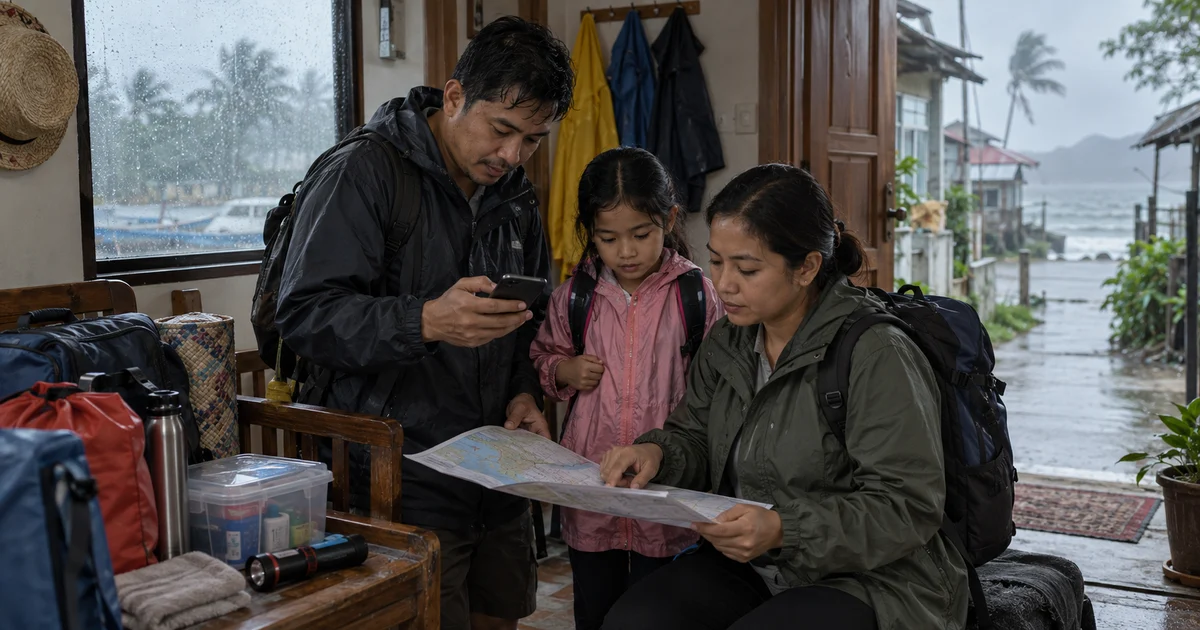
A storm surge can reach low-lying coastal communities quickly, while wind, rain, power loss, and congested roads make ordinary family messaging unreliable. The safest reunion plan begins before the weather worsens - not when relatives are already taking different routes.
A storm surge evacuation meeting plan should answer four questions: Who tells the family to act? Where does each person go? How will everyone report their status? What happens when phones or roads stop working?
Let official warnings decide when to leave
A storm surge is not simply a high tide. PAGASA explains that strong tropical-cyclone winds can push seawater over low-lying coastal areas. Its guidance tells people in storm-surge-prone communities to monitor official advisories, identify the quickest safe route to high ground, know locally designated reinforced evacuation buildings, and leave when municipal or barangay officials instruct them to evacuate.
Do not wait to see water approaching. Do not use a phone map to decide that a shorter coastal road is safe. Warnings, local hazard maps, checkpoints, and instructions from disaster officials take priority over the family’s normal travel preferences.
Assign one adult to monitor PAGASA and local government channels, but make sure another person knows how. Save official pages and radio frequencies in advance. A screenshot of yesterday’s forecast or an unverified social post is not a current warning.
Choose two reunion points outside the danger area
The first point should be the evacuation center or high-ground destination identified by local authorities. Make the landmark exact: “registration desk inside the municipal gym,” not “at the gym.” Confirm that the site is open and intended for your community before adding it to the plan.
Choose a second point farther away in case the first facility changes, reaches capacity, or becomes inaccessible. This could be another official shelter or the home of relatives on confirmed safe ground. PAGASA specifically recommends making advance arrangements with family or friends who live in higher areas.
The meeting point is where the family reunites after evacuating. Nobody should remain in or return to a threatened neighborhood to wait for another person. If family members receive different instructions because they are in different barangays, each should follow the authority responsible for their current location.
Write a simple family status format
Long group-chat conversations are hard to follow when a network is congested. Agree on one short check-in format:
SAFE - with Lola - inside North Evacuation Center at registration - arrived 7:05 AM - battery 61%
Use a different opening word for a real need, such as HELP, followed by the person’s exact location and the problem. Contact emergency services or shelter staff directly for urgent assistance; do not rely only on a family chat.
Designate a relative outside the affected area as the family contact. Ready.gov’s hurricane preparedness guide recommends an out-of-area contact, written phone numbers, multiple evacuation routes, and text messages when phone systems are overwhelmed. Give children and older relatives a waterproof paper card containing names, numbers, medical needs, and both reunion points.
Plan for the people who cannot move quickly
List who needs medication, mobility assistance, infant supplies, transport, or help with pets. Pair each person with a specific helper instead of assuming “someone” will assist. Keep essential medicine, identification, water, chargers, clothing, and accessibility equipment in a bag that can be carried quickly.
If a relative relies on powered medical equipment or an accessible vehicle, contact the local disaster office before a cyclone threatens. The family plan should follow the assistance and shelter arrangements available in that community.
Before leaving, switch off electricity or gas only when local guidance tells you to do so and it is safe. Never delay evacuation to protect appliances, documents, or other belongings.
Use Nearby only after the safe route is known
When the family has received official instructions and is moving toward an approved safe place, Nearby can support temporary coordination among invited relatives. Put the meetup pin on the exact landmark inside the confirmed evacuation destination, share concise updates in the group chat, and let each participant choose whether to share their location.
One Android user can start the meetup and send a link. Invited relatives can join from the app or a browser, including on iPhone. This may help distinguish who has reached the correct entrance from who is still travelling.
Nearby is not a storm-surge warning, hazard map, rescue service, or proof of safety. GPS can drift, networks can fail, and batteries can run down. A pin must never encourage somebody to cross floodwater, ignore a road closure, or leave an official shelter. If authorities move evacuees, follow them first and update the group when safe.
A useful plan is deliberately repetitive: official warning, safe route, confirmed shelter, short check-in. Practise it on a calm day so every family member knows that evacuation comes before reunion.
Use Nearby as a secondary family coordination tool after following official evacuation instructions.
Common questions
Where should a family meet during a storm surge evacuation?
Use the evacuation center or high-ground location designated by local authorities. Add a precise landmark inside that safe site, but never choose an unofficial point inside a storm-surge zone.
Should family members wait for everyone before evacuating?
No. Follow evacuation instructions immediately and reunite at the agreed safe destination. Waiting in a threatened area can put the whole family at greater risk.
Can Nearby warn us when a storm surge is coming?
No. Nearby does not issue weather warnings, identify hazard zones, or direct evacuations. Follow PAGASA and local disaster officials, then use Nearby only as a secondary coordination tool when conditions and connectivity allow.