How to coordinate airport pickups without curbside chaos
Coordinate an airport pickup with clear roles, a legal waiting area, flight-status checks, and one message that tells the driver when to approach.
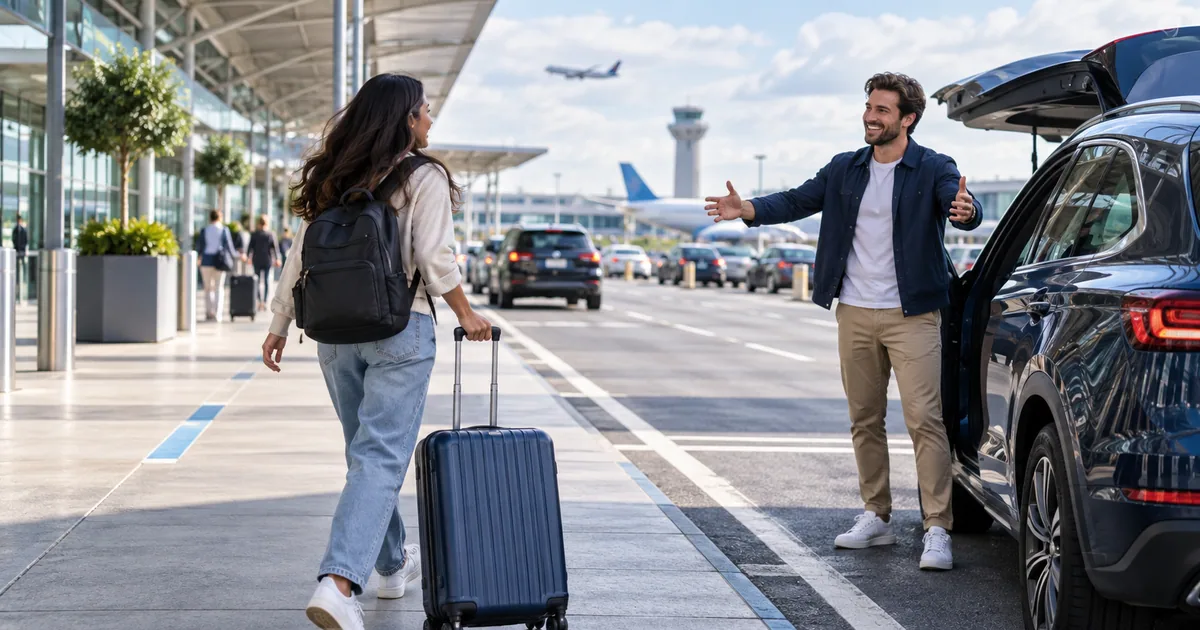
An airport pickup goes wrong when the driver follows the plane while the passenger follows the signs. The driver reaches the curb too early, traffic officers move the car, and the passenger emerges just after it leaves.
The fix is a staged plan that respects airport rules and the real pace of an arrival.
Divide the pickup into three stages
Stage one: wait legally. The driver uses the airport’s official waiting lot or short-stay parking area. Airport curb space is for active pickup, not for watching a flight tracker.
Stage two: collect the bags. The passenger messages only when immigration is complete and every bag is in hand. If luggage is delayed, they say so before the driver leaves the waiting area.
Stage three: approach one named zone. The message includes terminal, level, door or bay, and side of the road. The driver replies with vehicle colour, model, and plate ending.
Give each person one job
For a family or tour group, nominate one passenger communicator. Ten separate “we are outside” messages often describe different exits. The coordinator confirms that everyone is present, counts the luggage, and sends the final call.
The driver should not read messages while moving. Pull over legally, let a passenger handle updates, or wait until parked.
Plan for the common surprises
Terminal changes, flat batteries, and lost bags are normal enough to deserve a fallback. Save the flight number and airport pickup map offline. Agree that if contact fails, the passenger waits at a staffed information point while the driver stays in the official waiting area.
If the flight is significantly delayed, check the airline and airport before starting the drive. Travellers on U.S. routes can also review airline commitments through the U.S. Department of Transportation cancellation and delay dashboard; elsewhere, use the relevant national regulator and airline terms.
Where Nearby fits
Start a Nearby meetup as the flight approaches. Put the shared pin on the authorised pickup zone, not simply on the terminal building. The arriving passenger can open the invite in a browser without an account, while the Android organiser uses the app.
Nearby can reduce repeated “how far away are you?” calls while the driver approaches, but it does not replace airport signs or pickup rules. GPS can also drift around multi-level roads. The bay number in the message remains decisive.
For the indoor handoff before this stage, see how to meet someone at the airport.
Copy this pickup message
“We have all 4 bags. Terminal 2 arrivals, Level 1, Pickup Bay 6. Three passengers. I am wearing a yellow jacket. Please reply with the car colour and final three plate characters.”
That single message turns a moving target into a controlled handoff - and keeps the curb moving for everyone else.
A temporary Nearby meetup gives your pickup group one pin, live positions, chat, and an automatic end after two hours.
Common questions
When should the airport pickup driver leave the waiting area?
Leave only after the passenger has cleared immigration if applicable, collected every bag, and confirmed the exact pickup zone. An aircraft landing notification is much too early.
What details should I send to an airport pickup driver?
Send the terminal, official pickup-zone name, door or bay number, passenger count, luggage count, and a description of the vehicle. Avoid vague instructions such as outside arrivals.
Where can a driver wait at an airport?
Use the airport's designated waiting lot, short-stay car park, or other permitted area. Rules vary, so check the airport's official parking and pickup guidance before travelling.