How to plan a group day trip that stays on track
Plan a group day trip with realistic travel, one essential booking, weather alternatives, clear costs, and meeting points for every major transition.
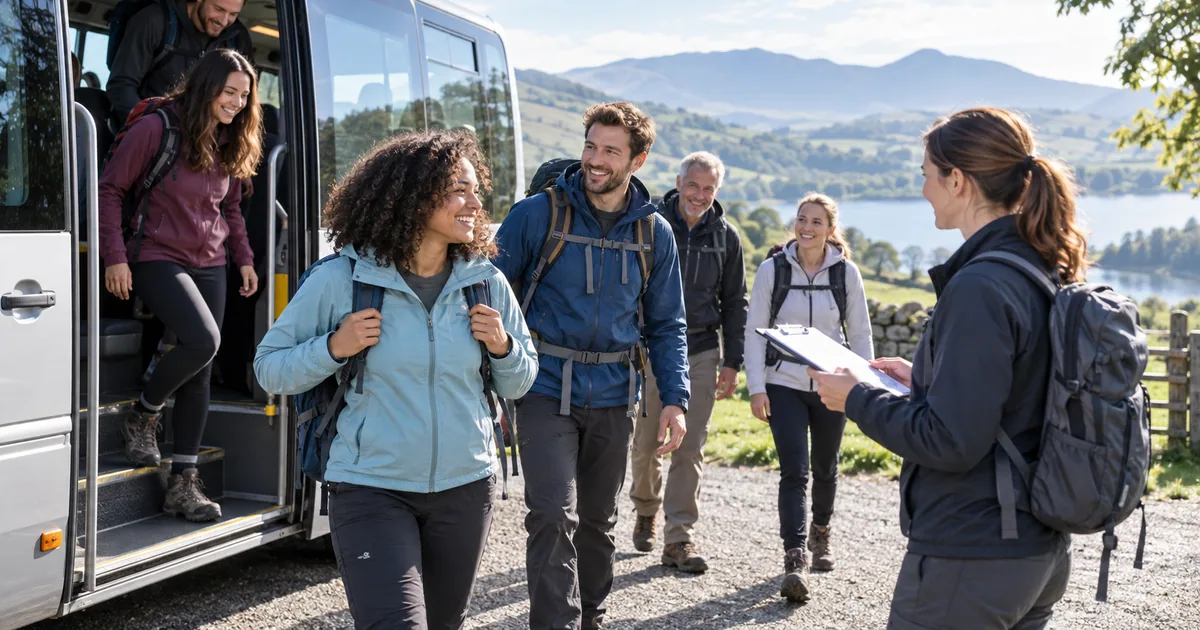
A group day trip has a hard edge that a weekend away does not: everyone must return before the final train, vehicle booking, or family commitment. The plan succeeds when it protects that return while leaving the middle enjoyable.
Work backwards from home
Start with the latest acceptable return and the final transport you are willing to take. Add a buffer. Then build the day backward through the main activity and outbound journey.
Check official opening times, reservation requirements, and weather alerts close to travel. Keep one alternative that uses roughly the same route and budget.
Limit the anchors
Choose one primary experience and perhaps one secondary stop. A day trip does not need to justify the journey with a dozen attractions. Groups move more slowly because every transition includes toilets, tickets, and regrouping.
Share the full expected cost and what each person should bring. If tickets are non-refundable, collect confirmed money before purchasing.
Make departure rules kind and firm
Give an arrival time and a separate departure time. The train or hired vehicle leaves at the latter. Anyone late follows the backup route or joins at the next fixed point.
Use a headcount at every major move, but do not rely on counting alone for children or vulnerable people. Assign direct supervision.
Where Nearby fits
A Nearby meetup can help up to ten people converge on the station entrance, trailhead, or pickup zone. Set the shared pin, send the browser-friendly invite, and use chat for a concise change.
Create another meetup for the return if the group splits during free time. Sessions last up to two hours, making them more appropriate for a specific gathering than for tracking the entire day.
For a day with several optional stops, structure the timings with the group trip itinerary guide.
The day-before check
- Weather and venue status
- Tickets and opening time
- Meeting arrival and hard departure
- Food, water, and accessibility
- Return transport and buffer
- Backup activity and emergency contact
When the return plan is solid, the group can enjoy the destination without repeatedly checking the clock.
Use Nearby for the meetup moments that begin and reconnect your group day trip.
Common questions
What should a group day trip plan include?
Include transport, total cost, one or two priorities, meal options, weather backup, accessibility, exact meeting points, and a firm return time.
How early should a group arrive for a day trip departure?
Set arrival 15 to 30 minutes before departure depending on tickets, parking, and group size. Make clear that the vehicle or train cannot wait beyond the stated time.
How do you keep a day trip from feeling rushed?
Limit the number of anchors, use realistic door-to-door travel estimates, and leave unscheduled time. A shorter plan experienced calmly is usually better than completing a checklist.