The barkada guide to actually meeting up on time
Filipino time, five group chats, and a barkada spread across three cities. A practical system for getting everyone to the same place on the same day.
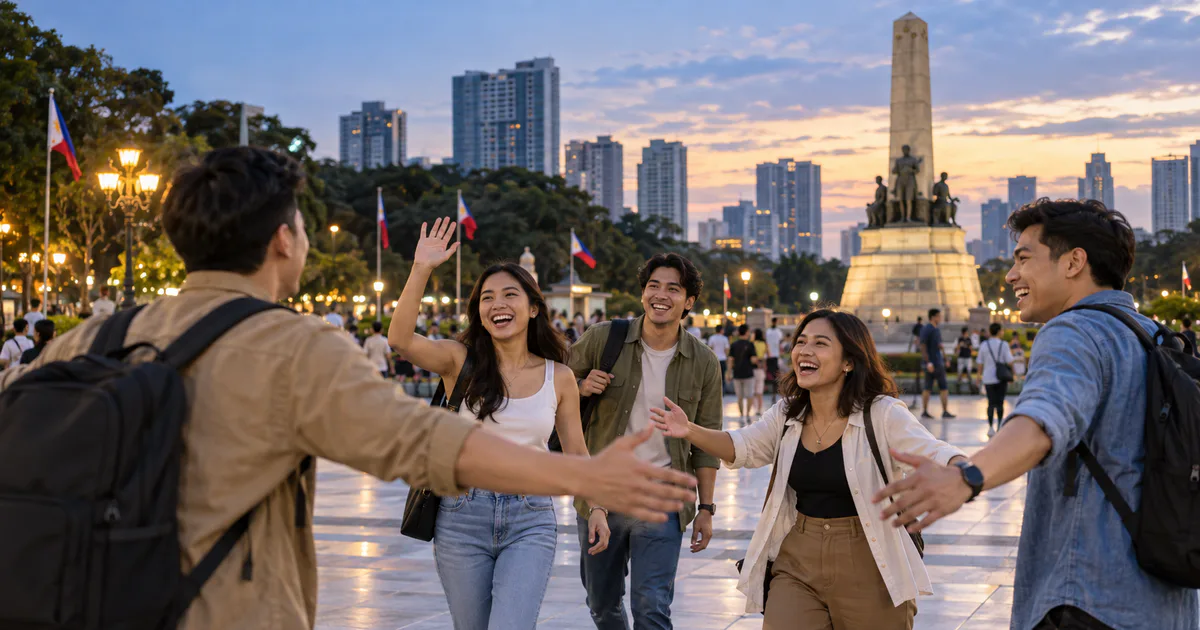
Every barkada has the same conversation. Someone posts “reunion tayo?” Forty-two messages of enthusiasm follow. A date is floated. Three people cannot make it. A new date is floated. The thread goes quiet. Six weeks later, someone posts “reunion tayo?”
The problem is not that nobody wants to go. Everybody wants to go. The problem is that the plan is being designed by committee, and committees do not converge.
Announce, do not consult
The single most effective change: one person picks the date, the time, and the place, and announces it.
“Saturday the 14th, 6pm, [venue]. Sabihin niyo kung kaya niyo.”
People then opt in or out of something real, instead of contributing opinions about something hypothetical. A plan that exists attracts people. A plan that is being discussed repels them.
Accept that not everyone will make it. A barkada meetup with six out of ten is a success, not a failed attempt at ten.
Give a window, not a time
Filipino time is a real scheduling input, not a joke, and the honest way to handle it is to design around it rather than complain about it.
Two techniques that work:
- Give a window for arrivals and a hard time for the thing. “Open from 6, kain tayo at 7:30.” Early arrivals are not stranded, latecomers are not the reason nobody has eaten.
- Say the real time for the real constraint. If the table booking is at 7 and the restaurant releases it at 7:15, say that. People respond to actual consequences, not to padding they know is padding.
And if traffic is the constraint - which in Metro Manila it usually is - build it in honestly. A 6pm meetup across EDSA on a Friday is a 7pm meetup.
Kill the “nasaan ka na?” loop
This is the part that eats the actual meetup. Everyone is en route, in different vehicles, and the group chat becomes a status board:
nasaan ka na malapit na saan ka ba on the way na
Nobody is lying. “Malapit na” means something different in a jeepney, a Grab, and an MRT carriage. But it does not tell anyone whether to order food.
The fix is to make position visible instead of asked. Anyone who can see that three people are ten minutes out and one is still in Quezon City can just decide - order now, or wait.
For barkadas spread across cities
Many barkadas are now split across Manila, the provinces, and abroad. What works:
- Anchor to a date months ahead, usually a holiday when people are travelling home anyway. Christmas, fiesta, Holy Week.
- Pick a venue that is easy to reach by public transport, not the one that is nicest for whoever picked it.
- Make it recurring. A barkada that meets on the same weekend every year stops needing to be organised at all.
- Run a smaller version more often. Four people meeting monthly keeps a barkada alive better than ten people meeting never.
Where Nearby fits
We build Nearby, so read this as interested - though the honest reason this article exists is that the clearest real usage we have ever seen in the app was exactly this: two friends in Tacloban coordinating a pickup, in Waray, one afternoon.
The fit for a barkada is specific:
- One link, and nobody installs anything. This matters enormously here. You are not getting ten people to download an app for one Saturday, and half the barkada is on iPhone. The link opens in any browser, they type a name, and they are on the map. Walang account, walang sign-up.
- The pin is the venue. Sent once, visible to everyone, with a live ETA each - so “nasaan ka na?” is answered on the screen instead of in the chat.
- It ends when the day ends. Nobody is permanently tracking their barkada, which nobody wants anyway.
Up to ten people, free, and live positions are never stored.
For town fiestas and bigger crowds, the rules change a bit - that is covered in meeting up at a fiesta.
The barkada checklist
- One person announces date, time, venue. No committee.
- Arrival window plus a hard time for the main event.
- Build traffic into the time honestly.
- Share one map link so nobody has to ask “nasaan ka na”.
- Six out of ten is a win. Book the next one before you leave.
Nearby is free on Google Play, at ang barkada mo can join from any browser.
Common questions
How do you get a barkada to actually show up?
Set one venue, one time, and one person deciding, then stop reopening the question. Most barkada plans die from renegotiation, not disinterest. Announce rather than consult, and let people opt in instead of designing the plan by committee.
What is the best way to coordinate a barkada meetup in Metro Manila?
Pick a venue on a transit line, give a window rather than a single time, and expect traffic to be the deciding factor. Share a live map so nobody has to keep answering "nasaan ka na?" while stuck in a jeepney or on EDSA.
How do you handle a barkada spread across different cities?
Anchor the plan to one fixed date decided far in advance, usually around a holiday when people travel home anyway. Then keep the venue central and easy to reach by public transport, and accept that a partial turnout is a successful meetup.